

By October 2027, every rinse-off cosmetic product sold in the EU must be microplastic-free. For color cosmetics, the deadline extends to 2035, but the business decisions you make today will determine your competitive position.
The EU Microplastics Regulation under REACH is forcing brands to rethink formulations that have been industry standards for decades. If you’re a decision-maker in business development, innovation, marketing, or product development, this regulation affects your portfolio planning, R&D roadmap, and market positioning, regardless of where your brand is headquartered.
This guide breaks down the timeline, clarifies what counts as microplastics in cosmetics, and explores the real business implications beyond compliance checklists. You’ll learn what reformulation involves and how nanoparticles and glitter fit in. You’ll also see why brands that act early gain advantages as sustainability becomes more important.
- What are microplastics in cosmetics (and why are they regulated)?
- Common microplastics in beauty products
- Understanding the EU Microplastics Regulation (REACH)
- Beyond microplastics: Nanoparticles under scrutiny
- Timeline: Key milestones for the microplastics in cosmetics ban (2027–2035)
- Why color cosmetics get more time
- The glitter challenge: Sparkle meets sustainability
- Reformulation: Challenges and strategic opportunities
- Assessing business impact: Portfolio and inventory risk
- Global ripple effects of microplastics in cosmetics: Beyond the EU
- How to prepare for the regulations of microplastics in cosmetics
- The strategic imperative: Act now, lead tomorrow
What are microplastics in cosmetics (and why are they regulated)?
Microplastics in cosmetics are plastic particles smaller than 5mm that are intentionally added during manufacturing to improve texture, performance, or visual effects. They are solid, water-insoluble materials and persist in the environment after use.
Common microplastics in beauty products
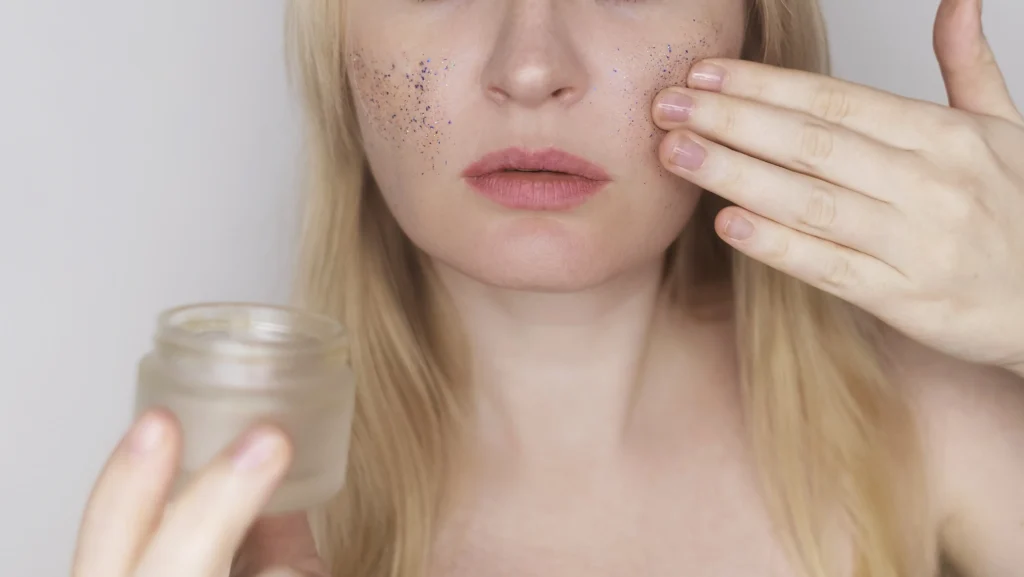
The following tiny plastic particles appear frequently in cosmetics formulations and fall under the restriction:
- Polyethylene (PE) is widely used in exfoliating scrubs, cleansers, and body polishes.
- Polymethyl methacrylate (PMMA) is common in primers, foundations, and complexion products where light diffusion is desired.
- Nylon functions as a texture modifier and film former, particularly in mascaras and other products requiring structure and hold.
- Acrylates copolymer provides binding and film-forming properties across multiple product categories, from nail polish to long-wear makeup.
- Polyethylene terephthalate (PET) is the primary material in conventional glitter formulations that creates shimmer and sparkle effects in eyeshadows, highlighters, nail products, and lip gloss.
Understanding the EU Microplastics Regulation (REACH)
➢ The REACH microplastics restriction

REACH (Registration, Evaluation, Authorisation and Restriction of Chemicals) is the EU’s chemical safety framework. Commission Regulation (EU) 2023/2055 introduced specific restrictions on intentionally added microplastics across product categories, including cosmetics and personal care products.
The regulation targets plastic materials that are solid, don’t dissolve in water, and don’t break down in the environment. Scientific evidence shows they enter the food chain, with potential consequences for both ecosystems and human health.
The European Chemicals Agency (ECHA) estimates that cosmetics and personal care contribute approximately 8,700 tons of microplastics to the environment annually. While this represents a smaller fraction compared to tire wear or textile fibers, intentionally added microplastics in products are among the most preventable sources of pollution.
The EU Microplastics Regulation establishes clear bans on microplastics in cosmetics with phased implementation timelines. The regulation splits microplastics into two types. Primary microplastics are intentionally added during manufacturing, and secondary microplastics are created through the degradation of larger plastics. Only intentionally added microplastics fall under the current restrictions.
➢ Why this matters for color cosmetics brands
Current data suggests that 87% of popular cosmetics contain some form of microplastic ingredient. For the cosmetics industry, this means significant portfolio exposure and reformulation requirements over the next decade.
This regulation goes beyond basic compliance. It has strategic impacts:
-
- Market access: Non-compliant products cannot be sold in the EU, regardless of where they’re manufactured. US and international brands selling into European markets must meet these standards.
-
- Brand reputation: Consumer awareness of microplastics and their environmental impact continues to grow. Brands that move slowly risk damage to their reputation, particularly among younger demographics who prioritize sustainability.
-
- Competitive positioning: Early movers in reformulation can differentiate on clean credentials while competitors manage portfolio transitions. Leading the charge in cosmetics sustainability creates marketing opportunities that extend beyond compliance messaging.
-
- Innovation catalyst: The regulation forces R&D investment in alternative ingredients, potentially unlocking performance improvements and patent-worthy formulations.
Beyond microplastics: Nanoparticles under scrutiny
REACH is expanding scrutiny beyond microplastics to nanomaterials, too. Nanomaterials are particles smaller than 100 nanometers. This matters for color cosmetics brands using nano-mica, nano-titanium dioxide, and nano-pigments for optical effects and sun protection.
The EU requires products containing nanomaterials to carry “[nano]” designation on ingredient lists. Safety assessments must specifically address nano-form properties, which differ from larger particle sizes of the same material.
What this means for your brand:
- You need certificates proving particle size distribution and manufacturing processes.
- If evidence grows around nanoparticle risks, more restrictions could follow. Brands reformulating now should consider whether these materials represent future liability.
- The “[nano]” label can trigger consumer concerns even when safety is established, requiring clear communication strategies.
Timeline: Key milestones for the microplastics in cosmetics ban (2027–2035)
The regulation phases in restrictions based on product category, acknowledging varying technical complexity:
| Deadline | Product category | What it means |
|---|---|---|
| October 2027 | Rinse-off cosmetics | Face scrubs, body washes, exfoliators, cleansers, and shower gels must be free of intentionally added microplastics. |
| October 2029 | Leave-on cosmetics | Moisturizers, serums, creams, and other leave-on products cannot contain microplastics. |
| October 2035 | Color cosmetics | Makeup, lip products, and nail polish must not contain microplastics. The longest transition period reflects technical reformulation challenges. |
Why color cosmetics get more time
The extended deadline for color cosmetics recognizes several technical realities:
- Performance complexity: Pigments, texturizers, and film formers that rely on plastic material are difficult to replace without affecting color quality, wear time, and sensory experience. A lipstick that transfers or eyeshadow that doesn’t blend properly won’t survive in the market, regardless of sustainability claims.
- Stability testing requirements: New formulas require 12-18 months of accelerated stability testing to ensure shelf life, compatibility with packaging, and microbiological safety.
- Supply chain development: Biodegradable alternatives are still emerging. Scaling production of new ingredients takes time, as does validating consistency across batches.
- Regulatory documentation: Each new formula requires updated safety assessments, toxicological data, and regulatory filings, multiplied across entire product portfolios.
The glitter challenge: Sparkle meets sustainability
Traditional glitter is a great example of intentionally added microplastics. These particles deliver high-impact sparkle in eyeshadows, highlighters, and nail products, but they are also being phased out.

However, the biodegradable alternatives don’t yet match conventional glitter across all dimensions. Plant-based options deliver softer sparkle and may degrade in humid conditions.
Until 2035, products containing microplastics must carry warning labels stating the product contains microplastics. This creates a marketing challenge because brands must highlight an ingredient on their packaging that consumers perceive negatively.
But, plant-based glitter (cellulose, eucalyptus), mineral effects (mica, calcium aluminum borosilicate), and biodegradable synthetic polymers show promise. Success requires balancing consumer expectations with sustainability goals.
Reformulation: Challenges and strategic opportunities
Replacing microplastics isn’t a simple ingredient swap. These materials serve functional purposes that affect product performance:
- Texture and sensory experience: Synthetic polymers create a smooth, silky skin feel and easy blendability. Alternative ingredients may feel different, potentially rougher, greasier, or less refined. This means you may need to reformulate the entire product, not just swap one ingredient for another.
- Color payoff and vibrancy: Some polymers enhance pigment dispersion and color intensity. Removing them can result in duller, less saturated products that underperform against competition.
- Product stability: Polymers help keep products stable and prevent ingredients from separating over shelf life. New formulations must undergo extensive stability testing to ensure products maintain quality through distribution and retail cycles.
- Preservative system compatibility: Changing base formulations can affect preservative efficacy. You may need to reformulate preservation systems concurrently, adding complexity and testing requirements.
Raw material costs typically increase 20-30% when replacing conventional synthetic polymers with biodegradable or natural alternatives. On a portfolio scale, this represents significant profit and loss (P&L) impact.
➢ The testing timeline reality
Once a reformulated product exits the lab, the clock starts on a lengthy validation process:
| Stability testing (12-18 months): Products go through accelerated aging at high temperatures, freeze-thaw cycling, and real-time shelf storage to demonstrate stability. |
| Safety assessments (3-6 months): Updated toxicological evaluation, irritation testing, and safety reports must be prepared for regulatory submission. |
| Consumer testing (2-4 months): Before launch, reformulated products need consumer validation to ensure performance and feel meet expectations. |
| Regulatory approval (variable): Depending on jurisdiction and ingredient novelty, regulatory review can add months to the timeline. |
This 18-24 month minimum timeline applies to each reformulated product. For brands with extensive color cosmetics portfolios, parallel development becomes essential, but R&D capacity constraints mean you can’t reformulate everything simultaneously. This reality explains why brands need to begin work now for the 2035 deadlines. The math is unforgiving.
➢ Reducing reformulation risk with digital validation
Reformulation increases uncertainty across performance, shade behavior, and consumer acceptance. Digital evaluation tools can help reduce this risk earlier in the development cycle.
Virtual try-on and shade-matching technologies allow brands to assess how new finishes, textures, and pigments behave on different skin tones before committing to large-scale physical sampling. This supports faster iteration, earlier detection of performance issues, and more confident prioritization of high-impact shades and formats.
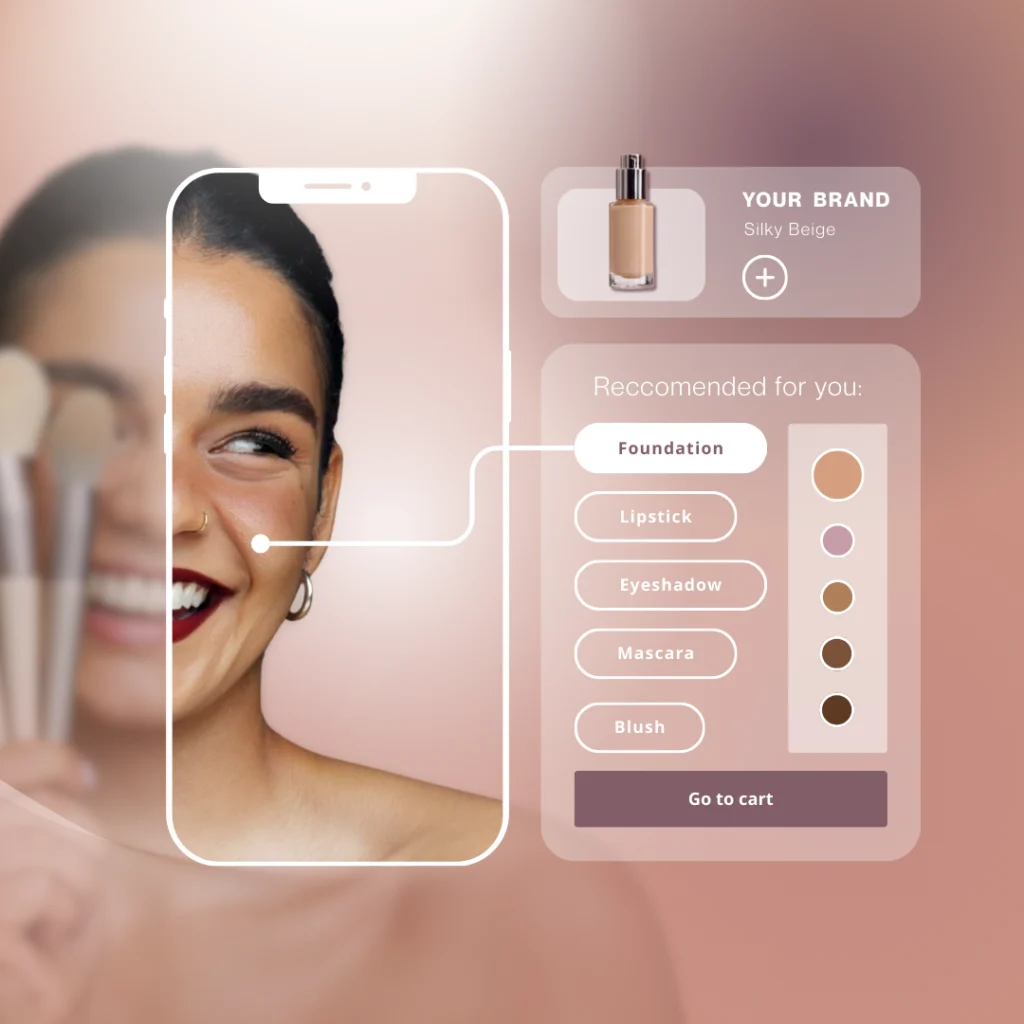
Such beauty tech solutions can also help maintain shade continuity when formulas or shade ranges change, while aggregated interaction data can reveal which shades, finishes, and product types attract the strongest consumer interest.
This insight supports smarter portfolio sequencing during reformulation and helps limit waste from repeated lab batches, test rounds, and returns.
Assessing business impact: Portfolio and inventory risk
Beyond R&D challenges, this regulation creates financial and operational implications.

Ask these questions to assess portfolio risk:
- Which products contain microplastics? Don’t rely solely on ingredient lists; confirm with suppliers.
- What percentage of revenue comes from affected products? This determines financial exposure and reformulation priority.
- Rank products by technical complexity. Simple formulations reformulate faster than complex multi-finish products.

Aditionally, assess inventory planning:
- How much non-compliant inventory exists in your supply chain?
- Plan phase-out schedules that prevent write-offs while avoiding stockouts before compliant versions launch.
- Consider geographic inventory segmentation if pursuing different formulations for EU versus non-EU markets.
Despite challenges, reformulation creates strategic opportunities:
✔ First-mover advantage: Brands that complete reformulation ahead of competitors can market clean formulations while others are still transitioning. This window of differentiation may be brief but valuable.
✔ Premium positioning: Sustainable formulations justify premium pricing, particularly when performance matches or exceeds conventional products. Transparency about R&D investment and ingredient quality strengthens brand equity.
✔ Patent opportunities: Novel formulations using biodegradable alternatives may be patentable, creating intellectual property that competitors cannot directly copy.
✔ Consumer trust: Brands that proactively address environmental impact build long-term consumer loyalty. This matters particularly for younger demographics who drive beauty purchasing decisions.
The intersection of clean beauty and technology reveals how brands are leveraging both regulatory compliance and digital innovation to differentiate in competitive markets.
Global ripple effects of microplastics in cosmetics: Beyond the EU
Restrictions on microplastics in cosmetics will expand, not recede. Beyond the EU, several markets are implementing or considering similar restrictions:
- United Kingdom: Post-Brexit, the UK maintained alignment with EU chemical regulations, including microplastics restrictions. Brands treating the UK separately from the EU should monitor whether divergence emerges over time.
- Canada: Environment and Climate Change Canada is reviewing microplastics in personal care products, with potential restrictions under the Canadian Environmental Protection Act.
- Australia and New Zealand: Both countries are evaluating microplastics regulations, with industry consultation suggesting future restrictions.
- Asia-Pacific markets: While not implementing EU-equivalent rules currently, major markets, including South Korea and Japan, are increasing scrutiny of cosmetic ingredients for environmental impact. Proactive brands are reformulating ahead of potential mandates.
How to prepare for the regulations of microplastics in cosmetics
✧ 2026-2027: Immediate actions
If you haven’t begun preparing for these regulations, start now:
| Conduct comprehensive ingredient audit: Identify every product containing microplastics. Work with formulators and suppliers to confirm which ingredients meet the regulatory definition, as some materials may not be obvious from ingredient lists alone. |
| Establish cross-functional task force: This isn’t solely an R&D problem. Include representatives from regulatory affairs, operations, marketing, finance, and commercial teams. Reformulation decisions affect every function. |
| Engage suppliers proactively: Initiate conversations about alternative ingredients now. Suppliers who understand your timelines and volume requirements can prioritize your needs and alert you to emerging materials before they’re widely available. |
| Prioritize portfolio: Not every product requires immediate attention. Focus first on top-selling products and complex formulas that need long development time. Also prioritize products already due for updates, such as new packaging or formula refreshes. |
| Allocate budget: Reformulation isn’t free. Secure R&D funding, testing budgets, and capital for potential equipment or process changes. Waiting until budgets are already committed for other initiatives creates unnecessary delays. |
✧ 2028-2030: Build and test
With initial groundwork complete, the focus in the next phase shifts to execution:
| Complete stability testing programs: Products entering testing now will have results by 2029-2030, leaving adequate time to address any issues discovered and retest if necessary. |
| Run consumer testing: Formula changes that seem minor to chemists can be deal-breakers for consumers. Validate that reformulated products meet or exceed current benchmarks in blind testing. |
| Use digital validation alongside physical testing: Virtual try-on and shade-matching tools can help teams visualize how reformulated products perform across diverse skin tones and lighting conditions before large-scale sampling, supporting faster iteration and earlier detection of performance issues. |
| Prepare regulatory documentation: Update Product Information Files (PIFs), Cosmetic Product Safety Reports (CPSRs), and other regulatory documentation well before launch timelines. |
| Scale validation: Bench formulations that work in the lab sometimes behave differently at production scale. Pilot runs and scale-up validation prevent expensive surprises during commercial launch. |
| Train commercial teams: Sales, marketing, and customer service need time to understand changes, practice positioning, and prepare for consumer questions. |
✧ 2031-2035: Execute and optimize
In the final stretch before the 2035 deadline:
| Phase out legacy formulations: Plan orderly transitions that avoid both excess inventory write-offs and stockouts. This requires coordination across manufacturing, distribution, and sales forecasting. |
| Monitor regulatory updates: As deadlines approach, expect clarifying guidance from the European Chemicals Agency ECHA on gray-area interpretations. Stay current to avoid last-minute scrambles. |
| Continuous improvement: First-generation reformulations may not be final. As better alternatives emerge, consider ongoing optimization to enhance performance, reduce costs, or improve sustainability metrics further. |
| Communicate proactively: Don’t wait until 2034 to tell consumers and retail partners about changes. Early communication builds understanding; late communication triggers skepticism. |
The strategic imperative: Act now, lead tomorrow
The brands that will thrive through this transition don’t view it purely as regulatory compliance; they recognize strategic opportunities. Being first to market with compliant formulas creates positioning that appeals to sustainability-focused consumers. Investing in next-generation materials may yield formulations that outperform conventional products, not just match them.
This approach builds consumer trust and loyalty. Brands that transparently address environmental impact create deeper relationships with consumers who share those values. The intersection of sustainability and personalization in beauty is particularly powerful; offering both environmental responsibility and individualized solutions strengthens customer value propositions.
The next nine years will determine which brands lead the post-microplastics era and which are simply catching up. The decisions you make today, about R&D investment, supplier partnerships, portfolio priorities, and brand positioning, will determine which category you fall into.
The reformulation clock is ticking. The question isn’t whether to act, but how quickly and strategically you can execute.
Frequently asked questions
1. Does REACH apply to cosmetics?
Yes. REACH (Registration, Evaluation, Authorisation and Restriction of Chemicals) applies to all chemical substances in the EU, including those used in cosmetic products. The 2023 microplastics restriction under REACH specifically targets intentionally added microplastics in cosmetics with phased deadlines through 2035.
2. What is the EU regulation for cosmetic products?
The EU Microplastics Regulation (Commission Regulation EU 2023/2055) restricts intentionally added microplastics in products, including cosmetics. It works alongside the EU Cosmetics Regulation (EC) No 1223/2009. Rinse-off products must be compliant by October 2027, leave-on by October 2029, and color cosmetics by October 2035.
3. How does EU microplastics regulation affect beauty brands?
Beauty brands must reformulate products containing microplastics (polyethylene, polypropylene, nylon, etc.) by specific deadlines. This requires R&D investment, stability testing (12-18+ months), supply chain changes, and updated labeling. Brands selling in the EU, regardless of where they’re based, must comply or exit the market.
4. Are microplastics banned in cosmetics?
Yes, microplastics are being phased out in EU cosmetics. Rinse-off products (scrubs, cleansers) must be microplastic-free by 2027. Leave-on products follow by 2029, and color cosmetics (makeup, nail polish) have until 2035. The ban applies to intentionally added synthetic polymer particles under 5mm.
5. Are microplastics banned in Europe?
Yes. The EU banned intentionally added microplastics across product categories, including cosmetics, under REACH Regulation 2023/2055. The ban has phased timelines: sports fields (immediate), most products (2027-2029), and color cosmetics (2035).
6. What are alternatives to microplastics in cosmetics?
Biodegradable alternatives include microcrystalline cellulose (plant-based exfoliants), jojoba esters (natural beads), silica and calcium carbonate (mineral alternatives), bio-based polymers, and plant-derived glitter made from cellulose or eucalyptus.
Contact us
Wnat to know more? Have question about beauty tech? Reach out to us and we’ll help!