
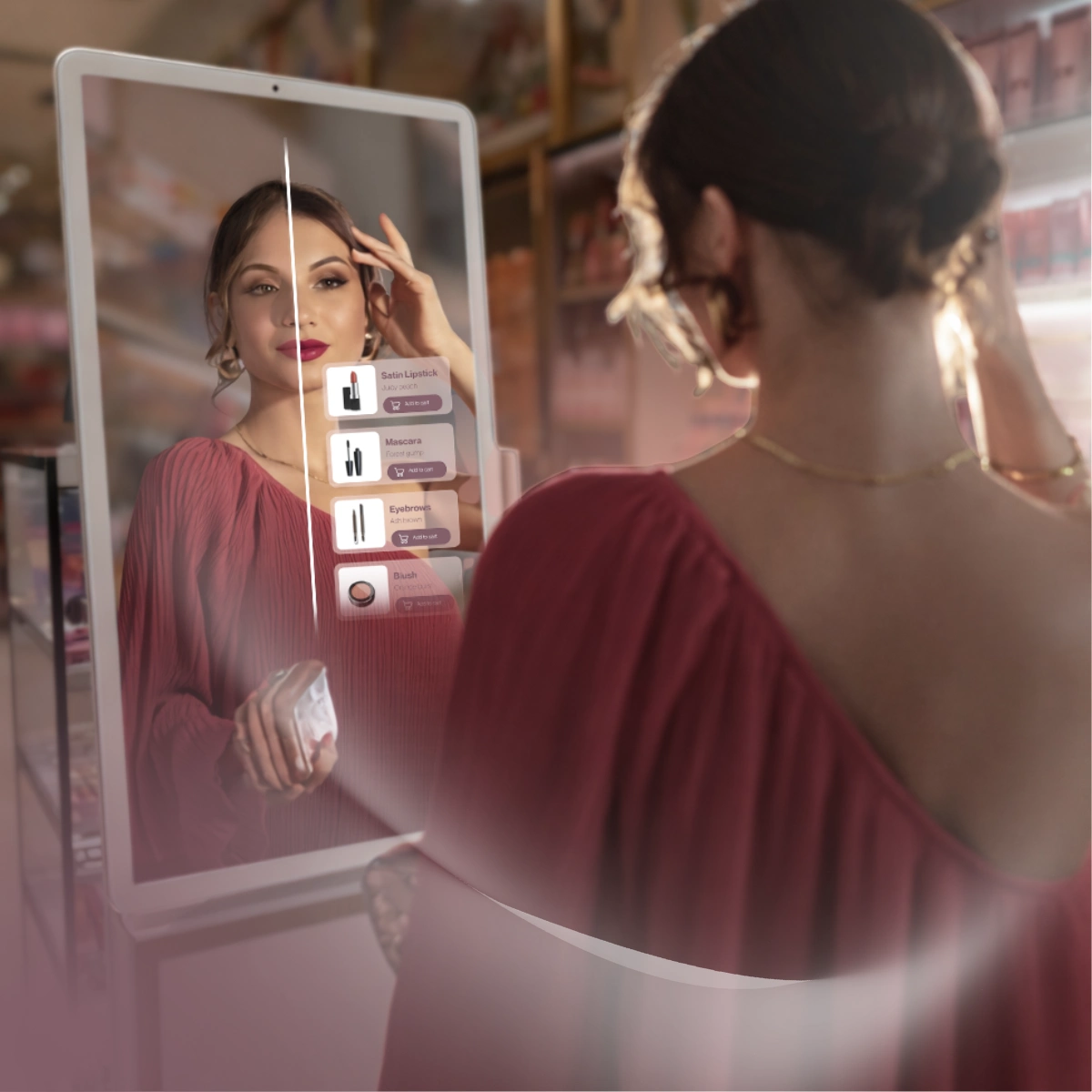
Brick and mortar beauty is not going anywhere. In fact, physical stores are still holding their own in the global beauty market.
Despite the explosive growth of online shopping, 50% of consumers still buy beauty products primarily in-store. Even Gen Z, a generation that discovers products on TikTok, TikTok Shop, and Instagram, prefers to make beauty and luxury purchases in person.
Generational beauty trends confirm this pattern across age groups. According to Attest, 58% of Gen Z shoppers still buy beauty and grooming products in physical stores.
Beauty is a high-touch category. Consumers want to test textures, match shades against their skin, and experience a product before committing. These beauty consumer trends are not slowing down. No amount of product photography or influencer content can fully replace that in-person moment.
But what has changed is that consumers no longer walk into a store without doing their homework first. And the stores they walk into are no longer the same ones they visited five years ago.
Beauty shopping is omnichannel
Product discovery increasingly starts on social media, review platforms, or brand websites. Consumers scroll, research, and compare long before they step through the door.
Two-thirds of beauty shoppers switch between digital and physical channels during a single purchase journey. And Harvard Business Review data shows that customers who engage with brands across multiple channels have a 30% higher lifetime value than single-channel customers.
For beauty brands, this means the physical store is no longer just a point of sale. It is one touchpoint in a longer, more complex journey. Success depends on making the transition between digital and physical feel natural and connected.
For a deeper look at what an omnichannel beauty strategy looks like in practice, read our full guide to omnichannel beauty experiences.

The role of physical stores is evolving
Walk into a modern beauty store, and you will notice the difference.
Rows of static displays and overcrowded tester trays are giving way to interactive screens, personalized recommendations, and technology-assisted consultations.
Physical retail is evolving from a purely transactional space into a discovery and experience environment. Beauty stores now combine the expertise of beauty advisors with smart technology that makes every customer interaction tailored and worth coming back for.
Technology and human expertise work best together. A skilled beauty advisor brings empathy, intuition, and the ability to read what a customer actually needs, not just what they say they need.
What technology does is make that advisor faster and better informed. It fills the gaps where human judgment alone falls short, like matching a foundation shade across 40+ options or recommending products based on skin tone analysis, which would take a human eye far longer.
The investment is already underway. In-store technology has become a key differentiator in 2026, with brands using interactive displays, AR tools, and experiential showrooms to convert store visits into measurable business outcomes.
How beauty retail technology improves the in-store experience
Beauty tech in stores is no longer experimental. Several technologies are already proving their value inside physical retail.
✧ Virtual try-on mirrors and kiosks
AR-powered mirrors let shoppers see how a lipstick, eyeshadow, or blush looks on their face without touching a physical tester. The technology uses real-time face tracking and color rendering, powered by AI in beauty retail, to simulate products with accuracy that keeps improving.
Across the industry, retailers that implement virtual try-on report an average 30% lift in conversion rates. And beyond conversions, these tools address a growing hygiene concern. Since the pandemic, many consumers have become hesitant to share testers, and virtual try-on offers a clean, contactless alternative.
✧ AI-powered shade matching
Shade matching has always been one of the biggest friction points in beauty retail.
A customer who walks out with the wrong foundation shade rarely comes back to try again- or comes back only to return the product. That puts pressure on the supply chain and erodes margins.
AI-powered shade matching tools use computer vision and skin tone analysis to recommend the right product from dozens or even hundreds of options in seconds.
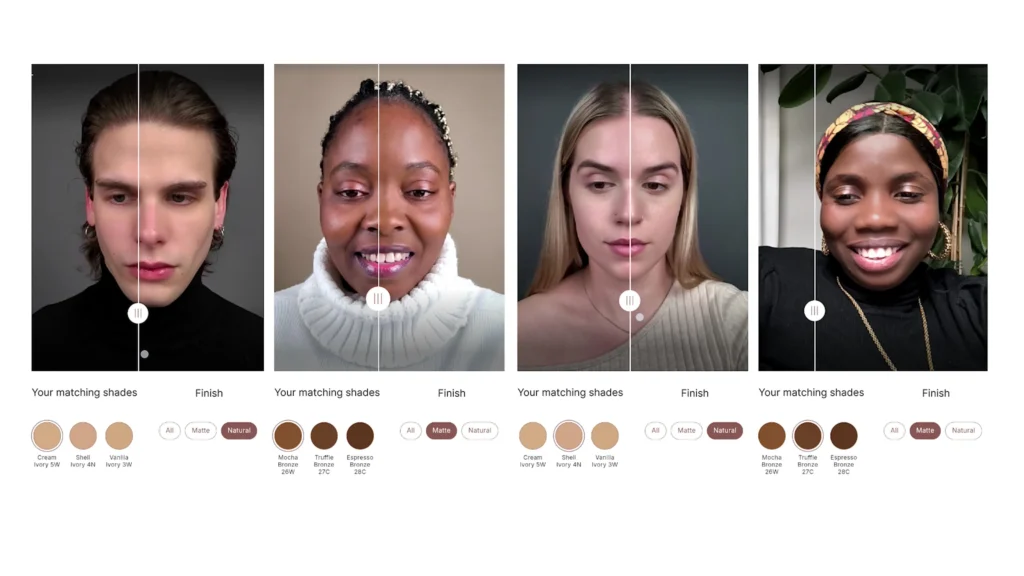
That translates to higher customer confidence, fewer returns (up to 64% fewer, according to industry data), and faster decision-making at the shelf. For beauty advisors, these tools are a powerful support system. Instead of relying on visual assessment under artificial lighting, they get a data-backed recommendation they can discuss with the customer.
Cosnova, for example, the company behind Essence and Catrice, saw a 20% increase in add-to-cart rates and 90% consumer satisfaction after integrating virtual try-on tools.
✧ Digital product recommendation engines
Smart recommendation systems analyze a customer’s preferences, skin type, or even the products they have tried before and suggest relevant options. In-store, this can work through smart devices such as interactive displays, tablets used by beauty advisors, or self-service kiosks.
Shorter decision time, higher basket sizes, and a more personalized experience make customers feel understood rather than overwhelmed by choice. For brands, this also builds retention over time.
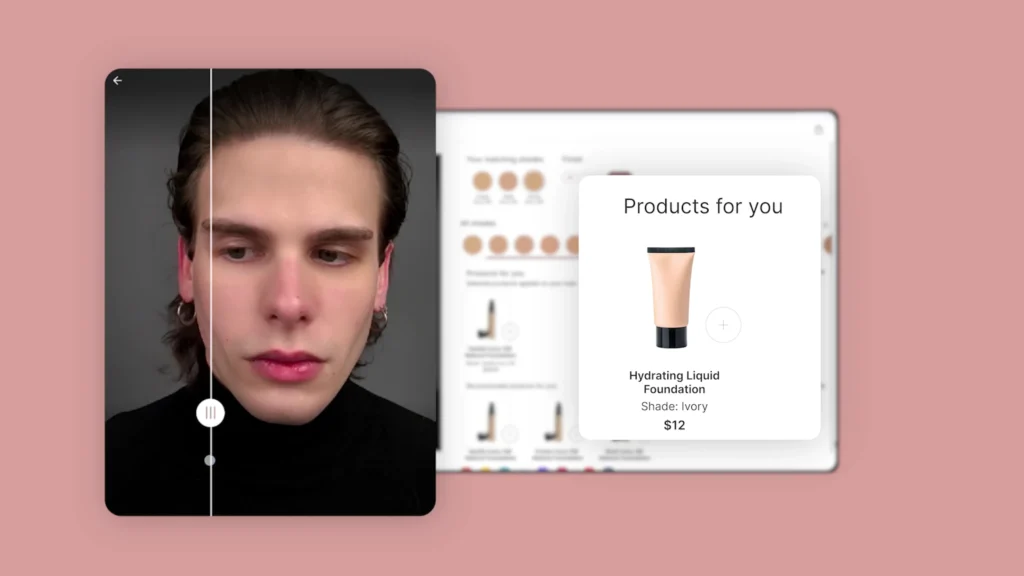
✧ Assisted selling tools for beauty advisors
Picture a beauty advisor pulling up a customer’s skin profile, past purchases, and generative AI-powered product suggestions mid-consultation. That is what assisted selling tools enable. The advisor stays in control of the conversation, but with better, more personalized information at their fingertips.
When advisors have better tools, they sell with more confidence, and customers leave more satisfied. Early adopters of AI-assisted selling report higher basket sizes and longer, more productive consultations.
What this means for beauty brands
Beauty tech in retail is already reshaping how consumers discover, try, and buy products in physical stores. With the AI in beauty market growing at 18-22% annually, brands investing now are seeing measurable returns in conversion, satisfaction, and loyalty. Our color cosmetics trends report explores how this plays out across product categories.
Now, here is what a smart beauty retail technology strategy might look like for your brand:
- Start with your highest-friction moment: For most color cosmetics brands, that is shade matching. Introduce a tool such as the Shade Finder, which will help customers find the right shade on the first try, reduce returns, and build trust fast.
- Augment your advisors, do not replace them: The best in-store technology makes human expertise better. Give your team data-backed tools that support their recommendations rather than sidelining them.
- Connect in-store and online: A customer who tries a product via virtual try-on in-store should be able to find that same product saved in their online profile. The journey should not restart when they leave the store. Learn how to integrate virtual makeup across touchpoints.
- Measure what matters: Track conversion rates, time-to-decision, return rates, and customer satisfaction scores before and after implementing beauty tech. Early adopters are already reporting 30% higher conversions, up to 64% fewer returns, and measurably higher customer confidence.
Physical stores remain where beauty brands build their deepest, long-term relationships with consumers. Technology is what helps the beauty sector scale those relationships. For more on turning personalization into revenue, see our report on monetizing personalization in beauty.
And to discover how to integrate AI solutions into your own brick-and-mortar beauty store, just reach out to our team of experts!
Frequently asked questions
How is AI used in beauty retail?
AI powers several tools in beauty retail, from shade-matching algorithms that analyze skin tone to recommendation engines that suggest products based on individual preferences. In physical stores, AI works behind the scenes to help beauty advisors give more accurate advice and helps customers find the right products faster. The technology also supports virtual try-on experiences by rendering realistic product simulations in real time. Learn more about consumer preferences for AI-powered makeup testing.
What technology is used in beauty stores?
Modern beauty stores use a combination of AR-powered virtual try-on mirrors, AI shade-matching tools, digital product recommendation displays, and assisted selling platforms for beauty advisors. These technologies work together to create more personalized, efficient shopping experiences while reducing friction points like shade mismatches and product overwhelm. Explore beauty tech solutions.
How does virtual try-on work in retail stores?
Virtual try-on in stores typically uses AR mirrors or kiosks equipped with cameras and face-tracking software. When a customer stands in front of the display, the system maps their facial features in real time and overlays a digital simulation of a makeup product, such as a lipstick shade, eyeshadow color, or blush. The rendering adjusts as the customer moves, giving a realistic preview without any physical product application. See how AR makeup try-on works.
How does beauty tech improve in-store shopping?
Beauty tech improves in-store shopping in several measurable ways: higher conversion rates (up to 30% on average), fewer product returns (up to 64% reduction), increased customer confidence in purchase decisions, and shorter decision-making time at the shelf. For beauty advisors, technology provides data-backed recommendations that make consultations more accurate and efficient. Read the latest cosmetics industry report.
Contact us
To discover how to integrate AI solutions into your own brick-and-mortar beauty store, reach out to our team of experts today.