

The moment of purchase matters to beauty brands.
The moment after matters more to customers.
They ask: Was this the right shade for me? Does this product still feel right in daylight? Would I buy this again or try something else next time?
Retention in beauty is decided in these post-purchase moments, not in campaigns or conversions. And yet, the average customer retention rate in the beauty industry still hovers around just 20–30%, meaning most brands lose the majority of customers after a single purchase.
That gap represents one of the biggest and most overlooked growth opportunities, and is where retention is now won or lost.
- What is customer retention in the beauty industry?
- Benefits of implementing customer retention strategies
- Main beauty industry customer retention strategies
- How to create a successful beauty industry customer retention strategy
- How to measure the success of your customer retention efforts
- Retention is built, not won
What is customer retention in the beauty industry?
Customer retention in the beauty industry is a brand’s ability to keep customers engaged and purchasing over time, rather than losing them after a single purchase. It measures how effectively a beauty brand encourages repeat purchases, builds long-term relationships, and increases customer lifetime value.
In beauty and color cosmetics, retention is influenced by product satisfaction, shade accuracy, ease of product discovery, brand trust, and the consistency of the customer experience across channels. Because beauty is deeply personal, even small points of friction, such as a poor shade match or confusing recommendations, can stop a customer from returning.
Benefits of implementing customer retention strategies
For beauty brands, retention is a growth lever that touches everything from revenue predictability to brand trust. When done well, customer retention strategies create value beyond the next purchase.
✔ Increased customer lifetime value
Loyal customers tend to drive higher customer spending as the relationship matures, up to 30% more after six months, and as much as 45% more after three years, according to VWO. In beauty, repeat buyers are more likely to explore new categories, try additional products, and stay loyal over time.
✔ Lower customer acquisition costs
Acquiring new customers is significantly more expensive (at least 5x) and harder (5-20% success rate) than retaining existing ones. Strong beauty customer retention reduces reliance on paid media and promotions by maximizing the value of current customers.
✔ More predictable revenue streams
Retention creates stability. A strong base of repeat customers makes revenue more predictable and helps brands plan inventory, launches, and investments with greater confidence. This is especially important in trend-driven categories like cosmetics.
✔ Stronger brand trust and loyalty
Brand loyalty among beauty and skincare consumers reached 42% in 2025, up 10% from just two years earlier. Retention strategies centered on personalization, accurate product recommendations, and inclusive discovery help build stronger emotional connections over time.
These expectations vary significantly by age group, as highlighted in our Generational Beauty Trends report, where younger consumers in particular show a stronger preference for personalized, values-driven brand experiences.
✔ Improved customer insights and decision-making
Retained customers generate richer data over time. Their behaviors, preferences, and feedback provide valuable insights that inform product development, merchandising, and experience improvements.
✔ Competitive differentiation in a crowded market
Effective customer retention strategies help brands differentiate through experience rather than price or promotion. Brands that consistently deliver confidence and relevance are harder to replace and easier to remember.
Main beauty industry customer retention strategies
Despite the global loyalty market being valued at $13.59 billion in 2025 and growing at 10.7% annually, many beauty brands still rely on points, discounts, and occasional perks to drive repeat purchases. The brands pulling ahead are doing something different: they’re redesigning loyalty.
Below are key types of customer retention strategies for beauty brands, with a focus on personalization, inclusivity, and technology.
1. Personalized product discovery
Helping existing customers find the right product quickly and confidently is one of the most powerful drivers of retention in beauty.
Personalized product discovery uses customer preferences, behavior, and context to surface the right shades, exclusive benefits, and routines. Tools like AI-powered shade finders, guided quizzes, and virtual consultations take the pressure off decision-making and lower the risk of disappointment.
Brands like cosnova are prime examples of how scalable, tech-driven product discovery can reduce uncertainty at the first purchase. They achieved 90% consumer satisfaction and double-digit conversion rates by helping customers find the right products with the Shade Finder – and giving them strong reasons to return.

Customer success story
Discover how cosnova, one of Europe’s fastest-growing beauty companies, achieved 90% consumer satisfaction and double-digit conversion rates with Arbelle’s Shade Finder: cosnova – Customer story.
2. Lifecycle-based personalization
Long-term relationships are already the norm in e-commerce. While exact figures vary by region and year, roughly 54% of online shoppers have signed up for e-commerce subscriptions, signaling a clear willingness to commit when the value feels consistent and reliable.
When customers trust that a product will continue to work for them, repeat purchasing becomes a default behavior rather than a decision they need to rethink each time.
This is the role of lifecycle-based personalization. Lifecycle personalization ensures that recommendations, content, and messaging evolve as the customer relationship matures, supporting customers before, during, and long after checkout.
For beauty brands, this includes:
- Follow-up after purchase
- Replenishment and refill recommendations
- Cross-category suggestions based on how customers already use products
3. Technology-enabled confidence building
Nearly half of beauty brands (42%) now use AR virtual try-ons, complemented by AI-driven recommendations and conversational guidance tools. These help customers make confident, informed purchase decisions at every stage of the journey.
Key tools include:
| AI-powered shade matching: One of the biggest barriers in color cosmetics is foundation mismatch. AI shade finders provide instant, personalized recommendations across devices, lower sampling costs, and expand reach to previously underserved skin tones and undertones. |
| Virtual try-on (VTO): AR-powered try-on lets customers see how products like lipstick, blush, or eyeshadow will look on their own face. VTO increases purchase confidence, boosts conversions by up to 90%, lowers buyer regret, reduces reliance on physical testers, and creates interactive, shareable experiences that enhance engagement and brand affinity. |
| AI-driven product recommendations and smart discoverability: Intelligent recommenders curate products based on behavior, preferences, skin type, and past purchases. They adapt in real time, surface complementary or under-discovered products, and guide shoppers through complex assortments. |
| Virtual makeup consultations: Combining AI chat capabilities with virtual try-on, these tools mimic the guidance of an in-store beauty advisor, available 24/7, personalized, and scalable. Customers can ask questions like “Which foundation matches my undertone?” and instantly try recommended products. |
Many brands also embed gamified features into these experiences, such as progress tracking, challenges, and early-access rewards, and many invest in these capabilities to make tiered loyalty programs more engaging.
4. Inclusive customer experiences
Inclusivity is a core retention strategy in beauty. Customers who feel excluded or underserved are unlikely to return, regardless of product quality.
Inclusive retention strategies ensure that product discovery, shade matching, and content reflect a wide range of skin tones, undertones, ages, and identities. Technology-enabled inclusivity allows brands to scale these experiences without creating fragmented journeys.
5. Consistent omnichannel experiences
Beauty customers move fluidly between online, mobile apps, and in-store touchpoints, sometimes all in the same week or day (or hour). When preferences, shade data, and history carry across channels, experiences feel seamless. Consistently reducing friction, building trust, and making repeat purchases easier are essential components of customer loyalty in beauty.
6. Post-purchase support and engagement
What happens after a customer buys often matters just as much as the purchase itself. Post-purchase content such as application tips, usage guidance, and routine-building support reinforces product value and helps customers achieve better outcomes.
Loyalty programs play a role here, too. 83% of consumers say loyalty programs influence their decision to make repeat purchases, especially when they offer real value.
Increasingly, loyalty is also shaped by brand values. Around 30% of consumers remain loyal to brands that align with their social or moral beliefs. For beauty brands, this means that retention strategies can’t be disconnected from brand purpose.
How to create a successful beauty industry customer retention strategy
Building a strong customer retention strategy in beauty isn’t just about adding more tools or running more campaigns. It’s also about making the experience work better. And that takes coordination. Experience, design, data, and technology need to work together around a single goal: reducing friction and building trust over time.
1. Start with the moments that cause churn
The fastest way to improve retention is to look at where confidence breaks down.
In beauty, churn usually starts with small moments of friction, such as an inaccurate shade match, too many choices, inconsistent experiences across channels, or a lack of guidance after purchase. Mapping these moments across the customer journey helps brands focus their retention efforts where they actually matter, rather than spreading resources too thin.

2. Reduce decision risk through personalization
Uncertainty is the enemy of retention. When customers aren’t sure a product will work for them, hesitation creeps in. That’s why personalization matters. Using customer data, behavioral signals, and AI-driven insights, brands can guide shoppers toward exclusive products that actually fit their needs, preferences, and context.
Personalized shade recommendations, tailored product discovery, and adaptive content all help remove guesswork. When customers feel guided, repeat purchases become more likely.

Monetize personalization
Personalization is not just a nice-to-have for your customers. It’s what converts. Discover how in our report: Monetizing Personalization in Beauty
3. Design for inclusivity from the start
Inclusivity should be embedded into retention strategies, not added later. Beauty brands that design inclusive discovery and recommendation experiences reduce exclusion-related churn and build stronger long-term relationships. Technology enables inclusivity at scale by ensuring that all customers, regardless of skin tone or background, can find products that work for them easily and confidently.
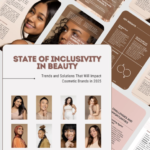
“Investing in personalized solutions is not only a way to boost consumer engagement. It’s also an opportunity to enhance inclusivity in the beauty industry, allowing brands to meet diverse needs and create lasting loyalty.”
– More on the critical role of incusivity in beauty in our report: The State of Inclusivity in Beauty
4. Ensure consistency across channels
Consistency is what turns a good experience into a reliable one. Customer preferences, shade data, and interaction and purchase history should carry seamlessly across e-commerce, mobile, and in-store experiences.

Consistency reduces friction, reinforces trust, and supports customer loyalty in beauty, especially for brands operating across multiple touchpoints.
5. Use beauty tech as infrastructure, not add-ons
Beauty tech should support retention outcomes, not operate as isolated features. Tools such as virtual try-on, AI-powered foundation shade finder, and conversational guidance should integrate into the broader customer experience.
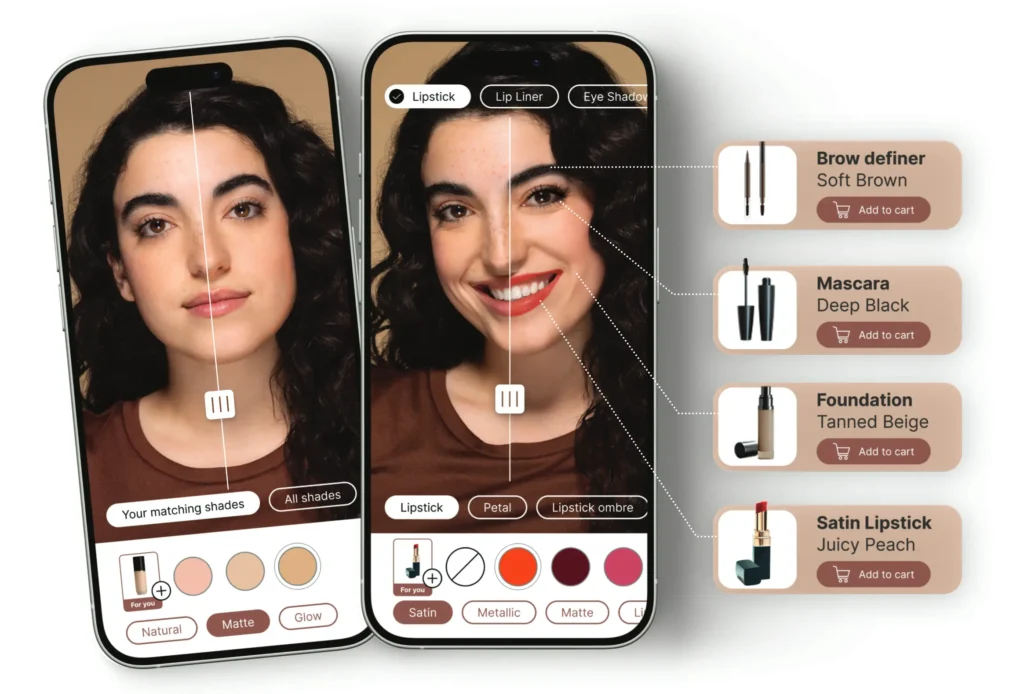
When technology is treated as infrastructure, it helps brands build confidence. The result is smoother experiences, better decisions, and stronger beauty customer retention over time.
6. Measure what actually drives retention
Tracking the right metrics is essential. Beyond repeat purchase rates, beauty brands should monitor customer lifetime value, time between purchases, return rates, and engagement with personalized experiences.
These indicators reveal whether retention strategies are improving confidence and relevance.
7. Continuously optimize based on customer feedback
Customer needs evolve, and successful strategies adapt accordingly. Use feedback, behavioral data, and performance insights to refine recommendations, content, and experiences over time.
How to measure the success of your customer retention efforts
To understand whether beauty industry customer retention strategies are working, brands need to track a combination of commercial, behavioral, and experience-driven metrics.
✧ Repeat purchase rate
Repeat purchase rate is one of the clearest indicators of retention. It shows the percentage of customers who return to buy again within a given period. A rising repeat purchase rate suggests that customers were satisfied enough and confident enough to come back.
✧ Customer lifetime value (CLV)
Customer lifetime value measures the total revenue a customer generates over the course of their relationship with a brand. Strong retention strategies increase CLV by extending that relationship and encouraging broader product adoption.
For beauty brands, growing CLV often signals successful personalization, accurate product recommendations, and consistent experiences that support long-term customer loyalty.
✧ Purchase frequency and time between purchases
How often customers buy, and how quickly they return offers insight into retention quality. Shorter intervals between purchases typically indicate stronger engagement and higher brand trust. Tracking purchase frequency by segment (first-time buyers vs. repeat customers) helps brands understand where retention strategies are having the greatest impact.
✧ Churn rate
Churn rate measures the percentage of customers who stop purchasing over a defined period. In beauty, churn is often gradual and silent, making this metric especially important.
A declining churn rate suggests that retention initiatives are successfully reducing friction, uncertainty, or dissatisfaction across the customer journey.
✧ Return and refund rates
High return rates can signal retention risks, particularly in color cosmetics, where shade mismatch is a common issue. Monitoring returns alongside retention metrics helps brands understand whether customers are leaving due to poor fit or unmet expectations.
Reducing returns through better guidance and personalization directly supports customer retention.
✧ Engagement with personalized experiences
Tracking how customers interact with personalized tools, such as shade finders, virtual try-on, or guided product discovery, provides insight into what drives confidence and repeat behavior.
Higher engagement with these experiences often correlates with stronger retention outcomes and higher lifetime value.

✧ Qualitative feedback and satisfaction signals
Customer reviews, surveys, and support interactions add critical context to quantitative metrics. They help explain why customers stay or leave. For beauty brands, qualitative feedback often reveals gaps in inclusivity, guidance, or experience consistency that traditional metrics may miss.
✧ Measuring retention holistically
No single metric tells the full story. Successful beauty brands evaluate retention by combining behavioral data with experience signals to understand how customers feel, not just what they do.
When these metrics trend in the right direction together, it’s a strong indication that retention strategies are working and delivering sustainable business value.
Retention is built, not won
Customer retention in the beauty industry isn’t driven by frequency tactics or loyalty mechanics alone. It is the result of experiences that consistently help customers make confident choices across products, channels, and the everyday moments that shape how they feel about a brand.
As competition intensifies and acquisition costs rise, beauty brands that focus on reducing uncertainty, supporting inclusive discovery, and delivering consistent personalization are better positioned to build long-term customer relationships and sustainable growth. When customers feel understood and supported, returning becomes the natural next step, not a decision they have to reconsider.
Personalization, inclusivity, and beauty tech now form the foundation of effective beauty industry customer retention. When treated as infrastructure rather than add-ons, they enable brands to scale trust, improve lifetime value, and differentiate in the market.
Looking ahead, the opportunity is clear. Beauty brands that move beyond one-off transactions and invest in systems that build lasting confidence won’t just retain customers, they’ll earn long-term loyalty.
Frequently asked questions
1. What is customer retention in the beauty industry?
Customer retention in beauty refers to a brand’s ability to keep customers engaged and purchasing over time, rather than losing them after a single transaction. It’s influenced by product satisfaction, shade accuracy, brand trust, and consistent experiences across channels.
2. Why is customer retention important for beauty brands?
Retention drives growth by increasing customer lifetime value, lowering acquisition costs, creating predictable revenue, strengthening brand loyalty, and providing actionable insights for product development and marketing.
3. What are the key challenges in retaining beauty customers?
Beauty customers may churn due to inaccurate shade matches, overwhelming choices, inconsistent omnichannel experiences, lack of post-purchase guidance, or feeling excluded by product offerings.
4. What role does technology play in retaining beauty customers?
Beauty tech such as AR virtual try-ons, AI recommendations, and virtual consultations helps customers make confident, informed choices, reduces returns, and creates engaging experiences that drive repeat purchases.
5. How can inclusivity boost customer retention in beauty?
Inclusive strategies ensure all customers, regardless of skin tone, age, or identity, can easily discover and use products. Brands that prioritize inclusivity reduce churn, build trust, and strengthen long-term relationships.
6. How do you measure customer retention in beauty?
Key metrics include repeat purchase rate, customer lifetime value (CLV), purchase frequency, churn rate, return/refund rates, engagement with personalized experiences, and qualitative feedback such as reviews and surveys.
7. How do generational differences affect beauty retention strategies?
Younger consumers, especially Gen Z and Millennials, prefer personalized, values-driven brand experiences. Tailoring retention strategies to these expectations, such as tech-enabled discovery and brand purpose, improves engagement and loyalty.
8. Where should beauty brands start to improve retention?
Start by mapping the moments where customers experience friction or uncertainty, like first-time shade selection or inconsistent experiences, and then use personalization, inclusivity, and technology to remove those barriers.
Retain customers with beauty AI
Contact us today to discover the main beauty AI tools designed to attract and retain customers.