
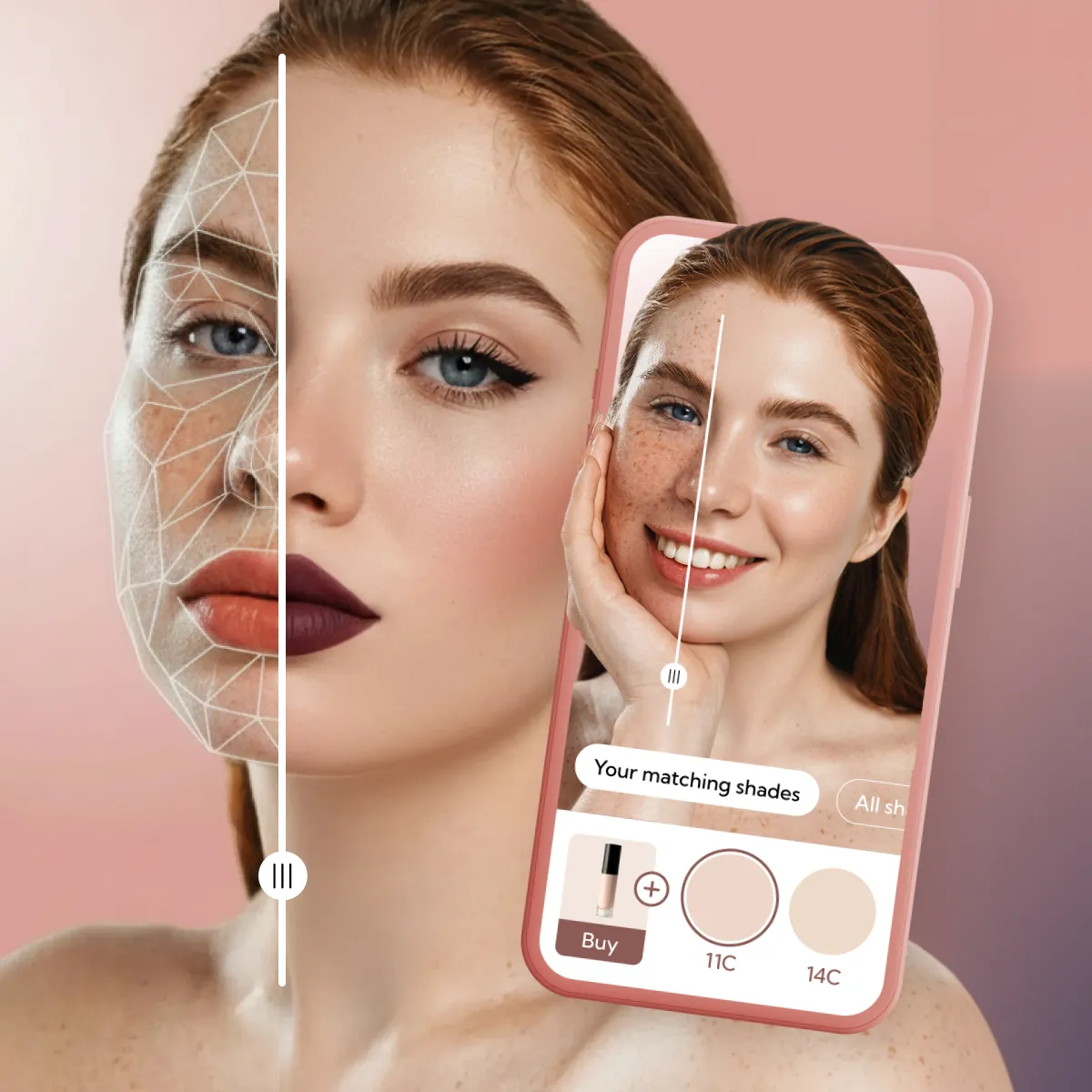
Choosing virtual makeup try-on software is no longer about adding a novelty feature to your website. For beauty brands, it is now a commercial decision tied to conversion, confidence, personalization, and customer experience.
The right platform can help shoppers feel more certain about shades, products, and looks before they buy. It can also generate valuable data on engagement, preferences, and purchase behavior.
The wrong platform can create friction, disappoint users with weak realism, or become difficult to scale.
In this guide, we compare leading virtual makeup try-on software providers based on what beauty brands actually need to evaluate in 2026:
- Rendering realism
- Implementation effort
- Personalization depth
- E-commerce integrations
- Analytics and optimization tools
- Commercial fit for your brand
If you’re comparing vendors such as Perfect Corp, ModiFace, Revieve, PulpoAR, Banuba, Beauty by Holition, Auglio, or newer alternatives like Arbelle, this guide is built for decision-makers across ecommerce, digital innovation, CX, and marketing teams.
- What beauty brands should compare before choosing virtual makeup software
- Quick comparison: leading virtual makeup try-on platforms in 2026
- Best virtual makeup try-on software providers reviewed
- Which virtual makeup software is best for your brand?
- Why more beauty brands are re-evaluating their current provider
- Final verdict
- Book a custom demo with your own products
- Frequently asked questions
What beauty brands should compare before choosing virtual makeup software
1. Realism that builds purchase confidence
Virtual try-on only works when consumers trust what they see.
That means accurate color rendering, realistic finishes, stable face tracking, natural fit across angles, and support for more complex textures such as shimmer, gloss, metallic, or multi-tone products.
If the result feels fake, confidence drops.
2. Speed of implementation
Some solutions look great in demos but take months to deploy. Ask vendors:
- How are products digitized?
- How quickly can new launches go live?
- How much internal developer support is required?
- How difficult is e-commerce integration?
3. Personalization capabilities
Some platforms focus mainly on AR visualization. Others combine try-on with:
- shade matching
- product recommendations
- skincare diagnostics
- guided selling journeys
- conversational AI assistance
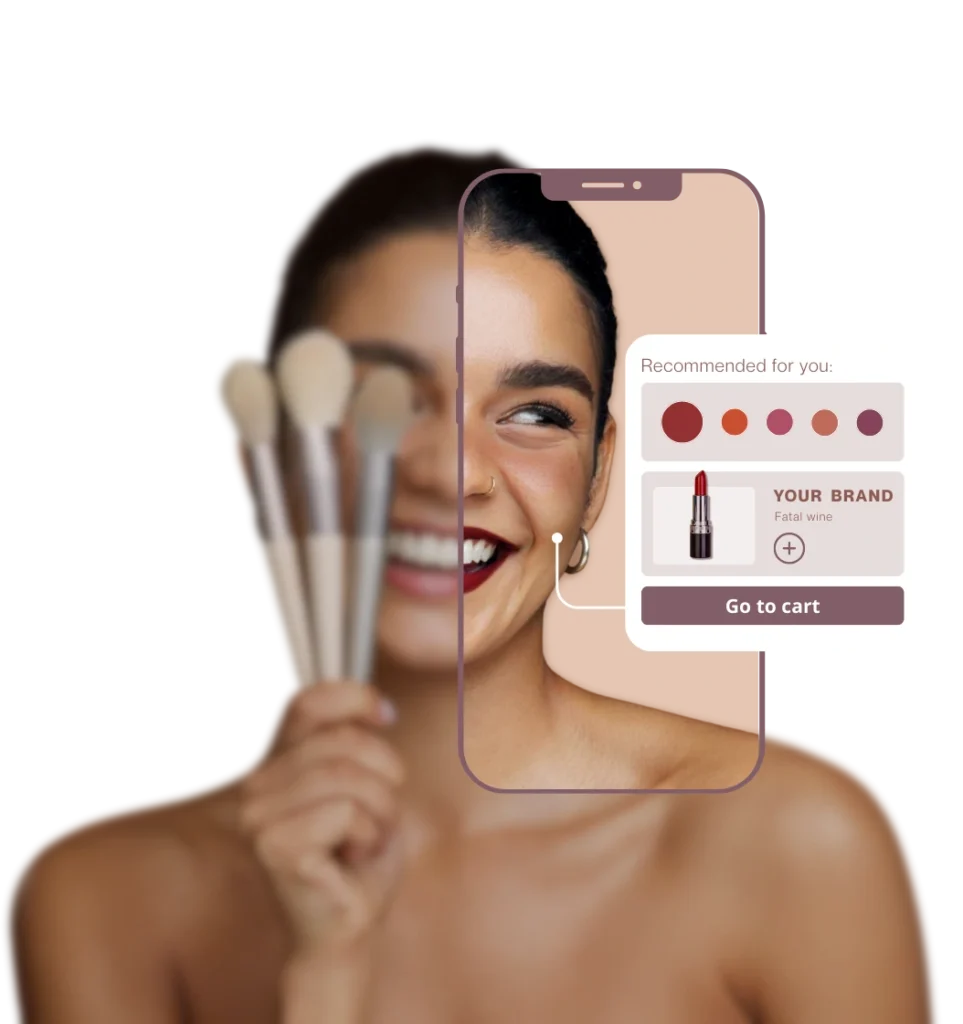
The best fit depends on your goals.
4. Analytics and measurable ROI
Modern beauty brands need more than engagement metrics. Look for tools that help measure:
- conversion lift
- click-through behavior
- shade demand trends
- repeat interactions
- product interest by region
- funnel drop-off points
5. Commercial fit
Some vendors are broad enterprise ecosystems. Others are modular specialists. Some are creative agencies. Some are closed ecosystems.
The best choice is not the one with the longest feature list. It is the platform that fits your operating model.
Quick comparison: leading virtual makeup try-on platforms in 2026
| Platform | Best for | Realism | Personalization | Analytics | Considerations / Compromises |
|---|---|---|---|---|---|
| Arbelle | Color cosmetics brands wanting realism + ROI | High | Strong | Strong | Emerging brand with smaller market visibility than legacy players |
| Perfect Corp | Large enterprise beauty ecosystems | High | Strong | Strong | Higher cost, broader platform, less hands-on support |
| Revieve | Guided selling + recommendation flows | Medium | Strong | Strong | Recommendation-led focus over try-on-led journeys |
| PulpoAR | Broad AI + AR beauty journeys | High | Strong | Strong | Less modular for some teams |
| ModiFace | L’Oréal ecosystem | High | Medium | Medium | Limited open-market availability |
| Banuba | SDK-first AR deployments | Medium | Limited | Limited | More custom work required |
| Beauty by Holition | Premium campaigns / luxury activations | High | Limited | Limited | Less scalable e-commerce engine |
| Auglio | Lightweight VTO implementations | Medium | Limited | Limited | Less advanced capabilities |
Best virtual makeup try-on software providers reviewed
1. Arbelle
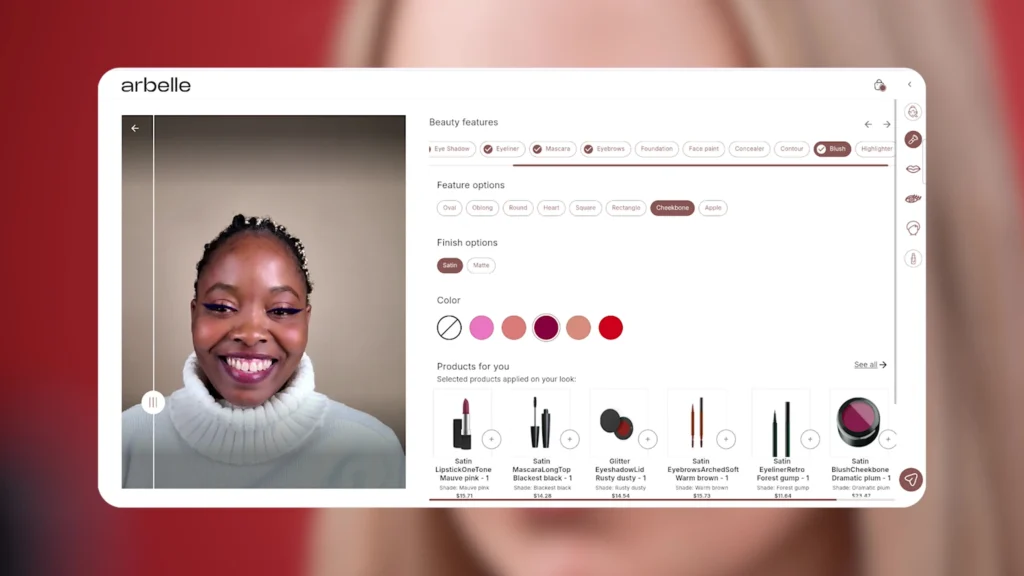
Best for beauty brands that want realistic virtual try-on, stronger complexion shopping journeys, measurable e-commerce impact, agility, and a more flexible partner approach.
Arbelle is a B2B beauty technology platform focused specifically on cosmetic brands. It combines realistic virtual try-on, AI shade matching, personalization, and analytics into a single ecosystem. It is backed by over 20 years of facial AI expertise from Visage Technologies, its parent company.
✔ Strengths
- Strong rendering realism with accurate textures and finishes
- Inclusive performance across skin tones
- Integrated shade matching capabilities
- Flexible deployment across web, mobile, and retail
- Real-time analytics dashboards
- Brand customization
- Dedicated support
- Privacy-by-design approach
⦿ Considerations
- Newer-generation but fast-growing provider competing against longer-established vendors
- More specialized beauty focus than broader multi-category vendors
2. Auglio
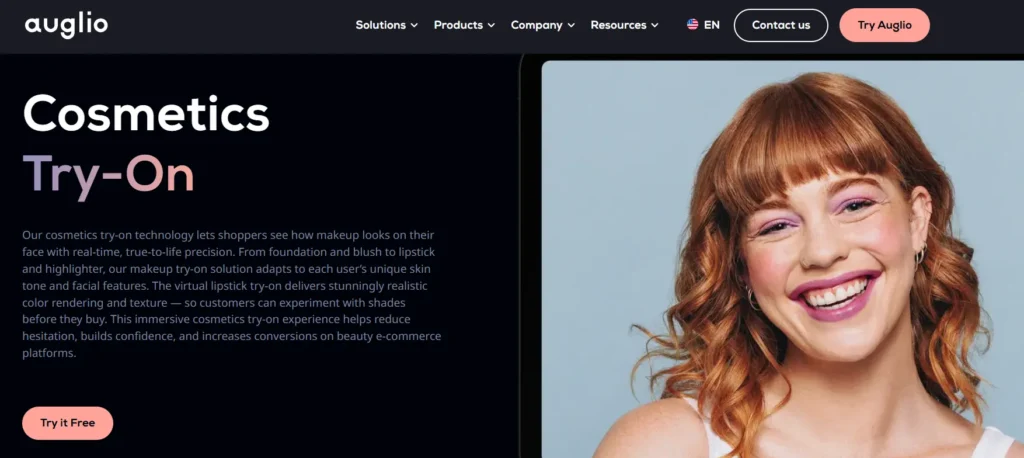
Best for brands wanting a lighter virtual try-on deployment.
Auglio is often considered by brands seeking a simpler implementation path.
✔ Strengths
- Easier starting point
- Lightweight deployment model
⦿ Considerations
- Focused more on core try-on functionality than advanced personalization tools like AI shade matching, smart recommendations, or segmented customer journeys
- Brands evaluating Auglio should confirm the depth of built-in analytics, including conversion tracking, engagement reporting, and product-level insights.
⥭ Auglio vs Arbelle
Auglio can be a good fit for brands seeking a lighter virtual try-on from a multi-category provider, with stronger visibility in areas such as eyewear. Brands seeking a beauty-specialized platform with more advanced beauty AI performance, stronger analytics, and richer try-on realism are likely to see Arbelle as the next-step solution.
➢ Official website: Auglio
3. Banuba (Tint)
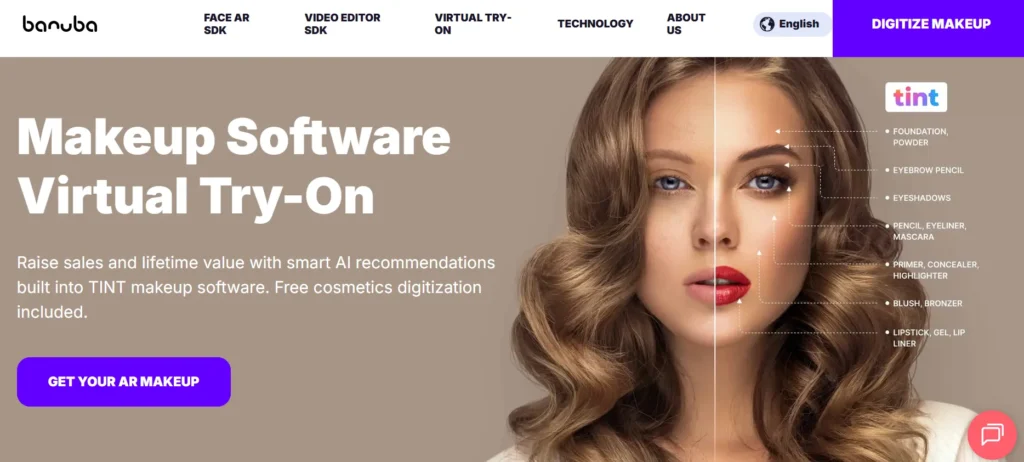
Best for teams wanting AR technology building blocks.
Banuba is often attractive to engineering-led teams seeking AR SDK flexibility.
✔ Strengths
- Developer-friendly
- Cross-platform support
- Good AR foundations
⦿ Considerations
- More internal work needed to build a complete beauty-commerce solution
- Lighter native analytics and personalization depth
⥭ Banuba vs Arbelle
Banuba is a good fit for teams that want flexible AR building blocks and are willing to commit internal engineering resources to develop custom solutions. Brands wanting a ready-to-grow commercial platform rather than raw AR components will often find Arbelle the stronger fit.
➢ Official website: Banuba
4. Beauty by Holition
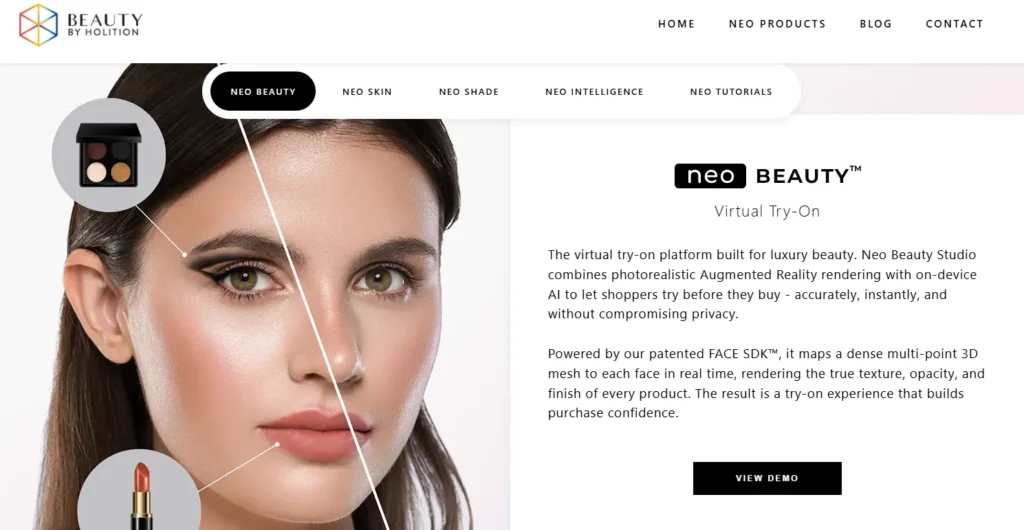
Best for prestige, luxury, and campaign-led digital experiences.
Holition is known for premium branded experiences and creative activations.
✔ Strengths
- Strong creative execution
- Good for launches and campaigns
⦿ Considerations
- Better known for bespoke campaign experiences than always-on ecommerce deployments
- Brands should assess the depth of built-in analytics, testing tools, and conversion reporting for ongoing optimization needs
⥭ Beauty by Holition vs Arbelle
Holition can be a strong fit for brands prioritizing premium digital experiences, launches, and creative campaign impact. Brands needing an always-on revenue engine with measurable performance and ongoing optimization may prefer Arbelle.
➢ Official website: Holition
5. ModiFace
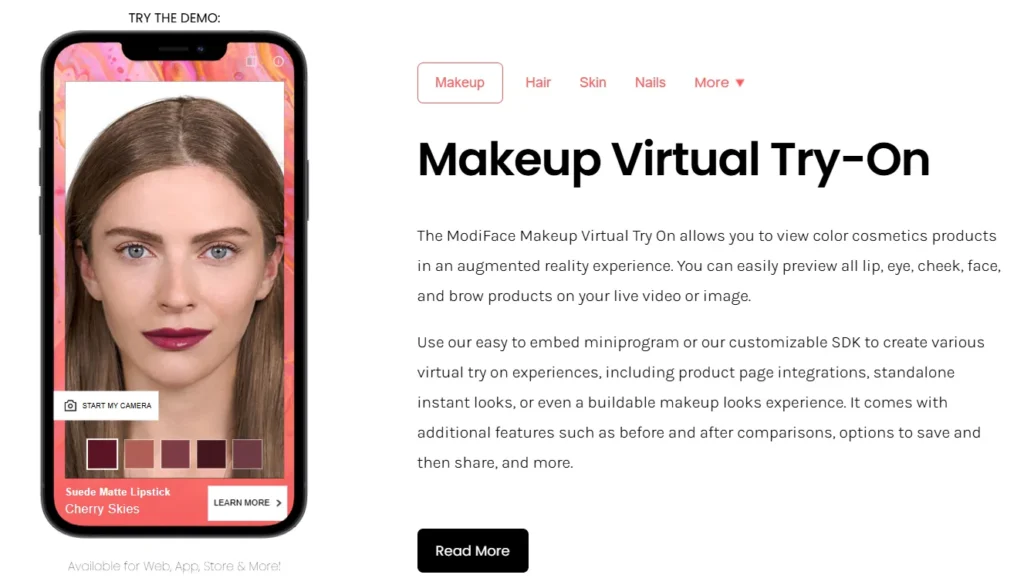
Best for brands within the L’Oréal ecosystem or evaluating market benchmarks.
ModiFace is historically one of the most recognized names in beauty AR. Since its acquisition by L’Oréal, it has become strongly associated with that ecosystem.
✔ Strengths
- Strong legacy reputation
- High-quality AR capabilities
- Proven large-scale deployments
⦿ Considerations
- Not commonly viewed as an open-market buying option today
- Less practical shortlist choice for many independent brands
⥭ ModiFace vs Arbelle
ModiFace may be most relevant for brands operating within or closely aligned to the L’Oréal ecosystem. For brands seeking an accessible, independent, modern beauty-tech partner with active commercial focus, Arbelle is the more practical option.
➢ Official website: ModiFace
6. Perfect Corp
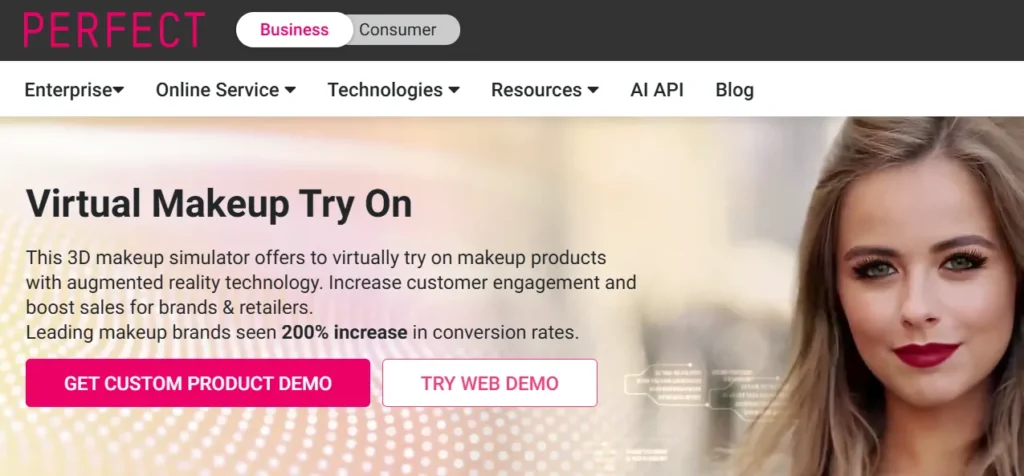
Best for large global brands wanting a broad beauty tech ecosystem.
Perfect Corp is one of the most established names in beauty tech. Its suite includes virtual try-on, skincare diagnostics, recommendations, and omnichannel tools.
✔ Strengths
- Mature platform
- Broad beauty feature set
- Strong enterprise presence
- Good omnichannel capabilities
⦿ Considerations
- Broader ecosystem than some teams need
- Large-scale vendors can sometimes feel less hands-on during day-to-day support and optimization cycles
⥭ Perfect Corp vs Arbelle
Perfect Corp can be a strong fit for large brands seeking a broad beauty-tech ecosystem, enterprise scale, and wide feature coverage. Brands that value close collaboration, faster responsiveness, commercial flexibility, and a more tailored partnership often prefer Arbelle’s model. Arbelle is also a stronger fit for teams that want focused beauty commerce outcomes rather than a very broad platform.
➢ Official website: Perfect Corp
7. PulpoAR
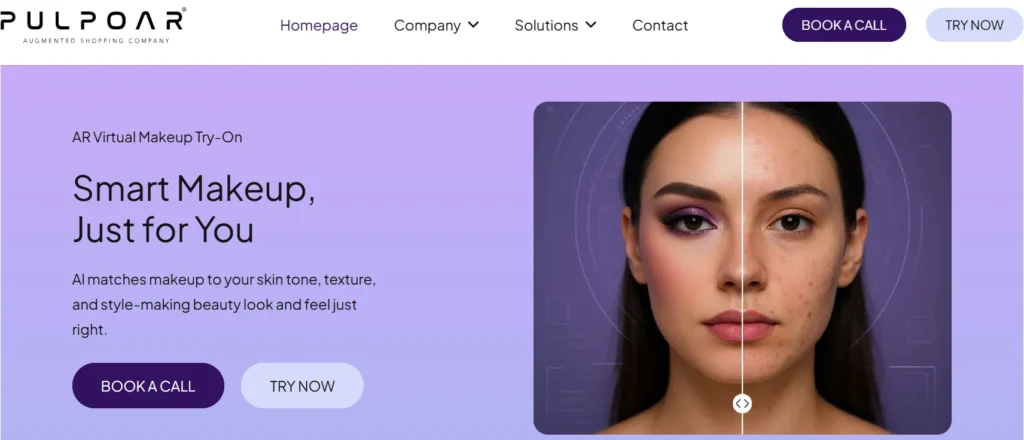
Best for brands wanting a wide AI + AR beauty stack.
PulpoAR offers virtual try-on, skin diagnostics, shade matching, and omnichannel retail tools.
✔ Strengths
- Strong breadth of beauty tech features
- Beauty-specific focus
- Good omnichannel use cases
⦿ Considerations
- Broad feature set may exceed the needs of brands looking for a more focused deployment
- Brands with narrower initial use cases should assess how selectively features can be deployed.
⥭ PulpoAR vs Arbelle
PulpoAR can be a strong fit for brands seeking a broad beauty-tech suite spanning virtual try-on, diagnostics, and omnichannel experiences. Brands looking for tighter customization, a more focused deployment path, and conversion-led execution may lean toward Arbelle.
➢ Official website: PulpoAR
8. Revieve
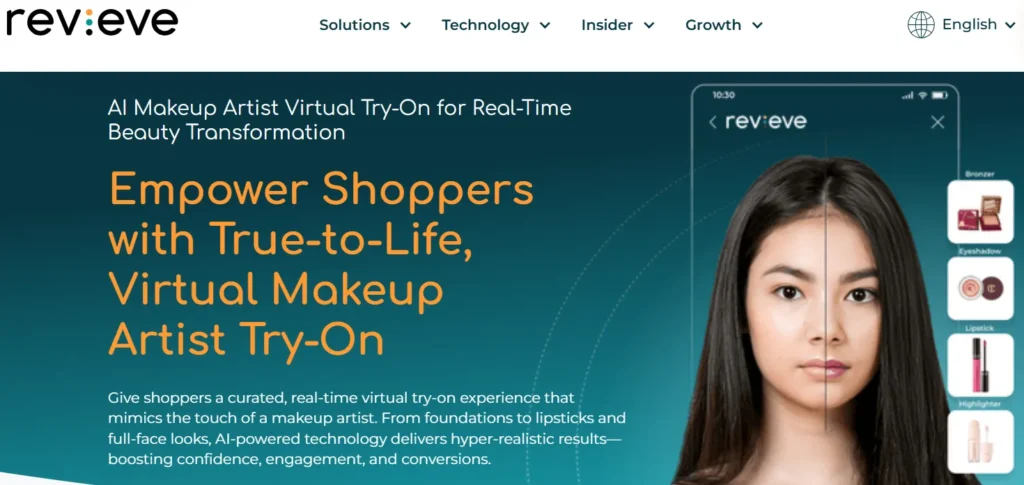
Best for brands prioritizing guided selling, recommendations, and personalization flows.
Revieve is especially strong in recommendation-led customer journeys and data-rich beauty discovery experiences.
✔ Strengths
- Product recommendations
- Guided routines
- Personalization flows
- Analytics support
⦿ Considerations
- Stronger fit for brands prioritizing guided selling, recommendations, and personalization flows than pure try-on-led use cases
- Brands should assess the depth of AR functionality, category coverage, and e-commerce integration needs based on their priorities
⥭ Revieve vs Arbelle
Revieve can be a strong fit for brands focused on guided selling, personalized recommendations, and customer discovery journeys. For brands prioritizing realistic makeup try-on, stronger shade confidence, and visually driven conversion, Arbelle is often the stronger fit.
➢ Official website: Revieve
Which virtual makeup software is best for your brand?
Choose Arbelle if you want:
- Better conversion from beauty ecommerce
- Strong complexion / foundation journeys
- Realistic rendering with advanced finishes
- Responsive partner support
- Analytics and optimization visibility
- A flexible commercial model
Choose Perfect Corp if you want:
- Large enterprise breadth
- Broad omnichannel deployment
- Established market leader status
Choose Revieve if you want:
- Recommendation-led journeys
- Guided discovery flows
Choose PulpoAR if you want:
- A broad AI + AR suite
Choose Holition if you want:
Why more beauty brands are re-evaluating their current provider
Many brands adopted virtual try-on early on to signal innovation. Now expectations are higher, and teams increasingly ask:
- Is this driving conversion?
- Is onboarding too slow?
- Are shoppers trusting the visuals?
- Can we actually measure impact?
- Are we paying for features we do not use?
- Are we getting the level of support we expected?
That shift is creating new opportunities for challenger platforms focused on business outcomes, flexibility, and partnership quality.
Final verdict
There is no single “best” virtual makeup try-on software for every beauty brand. There is only the best fit for your goals.
If you need broad enterprise scale, incumbents may fit. But if you need recommendation-led journeys, other platforms may lead. For example, for realistic beauty try-on, stronger complexion confidence, analytics, flexibility, and a partner focused on measurable growth, Arbelle deserves a serious look.
Book a custom demo with your own products
See how Arbelle compares using your real SKUs, real shades, and real customer journey goals. Contact us today.
Frequently asked questions
Frequently asked questions
1. What is virtual makeup try-on software?
Virtual makeup try-on software allows beauty brands to let shoppers digitally test makeup products such as lipstick, foundation, blush, eyeshadow, eyeliner, and other cosmetics using augmented reality (AR) and artificial intelligence (AI).
For brands, it helps reduce purchase hesitation, improve engagement, and increase conversion rates by giving customers more confidence before checkout.
2. What is the best virtual makeup try-on software for beauty brands?
The best virtual makeup try-on software depends on your goals.
- Arbelle is strong for brands focused on realistic try-on, complexion shopping journeys, analytics, and ROI.
- Perfect Corp is often chosen by large enterprises wanting a broad ecosystem.
- Revieve is strong for guided selling and recommendations.
- PulpoAR is suited to brands wanting a wider AI + AR stack.
The best option is the one that fits your commercial goals, internal resources, and customer journey priorities.
3. How much does virtual makeup try-on software cost?
Pricing varies widely depending on:
- number of SKUs
- traffic volume
- integrations required
- customization level
- analytics features
- support model
- deployment regions
Some vendors use enterprise annual contracts, while others offer more flexible commercial models. Brands should compare the total cost of ownership, not just license fees.
4. Does virtual makeup try-on software increase conversion rates?
Yes, when implemented well.
Virtual try-on can improve conversion by reducing uncertainty around color, finish, and suitability. It can also increase engagement time and product discovery.
Results depend on realism, UX quality, placement in the shopping journey, and how well the tool integrates with e-commerce flows.
5. Can virtual try-on reduce beauty product returns?
Yes, especially in shade-sensitive categories such as foundation, concealer, lipstick, and complexion products.
When shoppers feel more confident about what they are buying, mismatch-related returns often decrease.
Many beauty brands now evaluate virtual try-on partly as a returns-reduction tool, not just a marketing feature.
6. Which products can shoppers try on virtually?
Most modern platforms support products such as:
- lipstick
- lip gloss
- foundation
- concealer
- blush
- bronzer
- contour
- highlighter
- eyeshadow
- eyeliner
- mascara
- brows
Capability depth varies by vendor.
7. What should beauty brands look for in virtual makeup software?
Key buying criteria include:
- realism and shade accuracy
- texture and finish fidelity
- implementation speed
- ease of product onboarding
- e-commerce integrations
- analytics dashboards
- personalization tools
- support quality
- pricing flexibility
A polished demo is not enough. Brands should evaluate real business impact.
8. Is AI shade matching different from virtual try-on?
Yes.
Virtual try-on helps customers see products on their face. AI shade matching helps customers choose the right shade based on skin tone analysis and recommendation logic.
Many leading brands now combine both for stronger conversion outcomes.
9. How long does it take to implement virtual makeup try-on software?
Implementation timelines vary from a few weeks to several months, depending on:
- vendor onboarding process
- number of products
- e-commerce platform
- level of customization
- internal approvals
- global rollout complexity
Always ask vendors about both initial launch speed and ongoing product onboarding.
10. What is the best Perfect Corp alternative?
That depends on what a brand is missing today. Brands often explore alternatives for:
- more tailored support
- commercial flexibility
- stronger complexion journeys
- easier collaboration
- different pricing models
- more focused beauty-commerce outcomes
Arbelle is a strong option for brands seeking a more agile, partnership-led alternative.
11. Is virtual makeup try-on worth it for mid-sized beauty brands?
Yes.
Mid-sized brands can benefit significantly, as virtual try-on improves conversion efficiency without requiring massive traffic growth. It can also help them compete with larger players through stronger digital experiences.
Get custom demo
Contact us today to see how Arbelle’s virtual try-on performs using your real SKUs, real shades, and real customer journey goals.